
The core facts
Marc Jacobs is an American fashion house based in New York, owned since September 2026 by a partnership of WHP Global and G-III Apparel Group. The product range runs to ready-to-wear, bags, leather goods, shoes, jewelry, handbag collection eyewear and fragrance, with handbags as its core. Shows come roughly once a year, in early February, outside the official New York Fashion Week calendar. SoHo took the first store in 1997, and its flagship today is at 127–129 Prince Street in Manhattan. What follows in this marc jacobs overview is the designer, the labels, the corporate structure and the range as they stood in late September 2026. The singular search phrase «marc jacob overview» brings in plenty of readers, who should note the correct spelling carries a plural, Jacobs.
- Founder and Creative Director: Marc Jacobs, a New Yorker born in the city in 1963
- Founding year: 1984, according to the brand’s own timeline
- Head office: New York City
- Owners since 1 September 2026: the pairing of WHP Global and G-III Apparel Group
- Chief Executive: Eric Marechalle, in the job since 2017
- Labels still running: Marc Jacobs, The Marc Jacobs, Heaven by Marc Jacobs
The name on the label
New York City in 1963 was where Marc Jacobs was born, and Parsons School of Design was where he trained, graduating in 1984. While a student he became the youngest ever winner of the CFDA’s Perry Ellis Award for New Fashion Talent. He was at Perry Ellis from 1988 and in November 1992 he showed the grunge-inflected spring 1993 collection that made his name and cost him the job. His own timeline dates the «Original Grunge Collection» to 1993 and lists a redux in 2018. In 1997 he became the first creative director of Louis Vuitton, where he created its first ready-to-wear and ran artist collaborations with Takashi Murakami, Stephen Sprouse, Richard Prince and Yayoi Kusama. He showed his last Louis Vuitton collection in October 2013, was succeeded by Nicolas Ghesquière, and remains Founder and Creative Director of his own company.
The label family
Across the history of the Marc Jacobs brand, four names count, and three are still in use. The plain name belongs to the main line, which holds the runway collections and the priciest products. A diffusion line, Marc by Marc Jacobs, sat below it for fourteen years. Above the price floor is The Marc Jacobs, created to occupy that space. Separate again is Heaven by Marc Jacobs, which has its own art direction and price band. Offshoots that are not fashion labels are also run by the company: Bookmarc, Marc Jacobs Beauty and the Bark Jacobs dog line.
Marc Jacobs
The main line holds the runway business and started every other label. The bag categories are The Tote Bag, The Snapshot and The Scene, plus groupings for crossbody, mini, shoulder bags and totes. The Tote Bag forms the largest family, launched in 2019 and reinvented each season. The shape of The Snapshot is a camera bag, and the brand says it was conceived in a Parisian studio with its design team. The Sack Bag turned up first on the 2022 runway, and The Scene now has its own place in the site navigation. The company attributes to Jacobs the line «No more Birkins, only Tote Bags,» framing it as a rejection of exclusivity rather than a pursuit of it.
Marc by Marc Jacobs
The diffusion line, Marc by Marc Jacobs, launched in 2001 as a line aimed at a younger, cheaper end of the market. It lasted fourteen years, and for many shoppers it was the first encounter with the designer. The line came to an end in 2015, after the fall and winter collection, and went back into the main line. The move deleted a distinct price tier from the business rather than simply renaming it. Buyers still come across the label on resale pieces from that period, the only place it now exists. It matters that you recognize the name, because it is routinely confused with the sub-label that replaced it.
The Marc Jacobs
The Marc Jacobs was announced in December 2018 and launched for pre-fall 2019, about four years after the diffusion line closed. It is a cheaper sub-label descended in function from Marc by Marc Jacobs, built to reoccupy the tier the company had vacated. Most casual buyers meet this line rather than the others, since it holds the canvas totes and much of the everyday accessory range. Online, those products are still tagged as part of «THE collection,» the quickest way to identify one. The definite article is intentional and capitalized, so it is written The Marc Jacobs. Mix it up with the main line and you get much of the price confusion around the label.
Heaven by Marc Jacobs
The launch of Heaven by Marc Jacobs came in September 2020 under art director Ava Nirui, and it was built around youth subculture and a gender-fluid, do-it-yourself sensibility. The company describes it as a gateway into what it terms the omniverse of Marc Jacobs subversion, and quotes Jacobs saying that «Heaven is a world within our Marc Jacobs world». Prices sit well under the main line, with bags around $150 to $250 and tees from about $65 on the US site in September 2026. The catalogue stretched to roughly 153 products, and it runs standalone stores in Los Angeles, New York and London. Product names carry artist collaborations, among them a David Rappeneau shoulder bag listed at about $175. Nirui left, as reported in January 2026, with no successor named, so the label’s current creative leadership is not confirmed by the brand.
Ownership and the people in charge
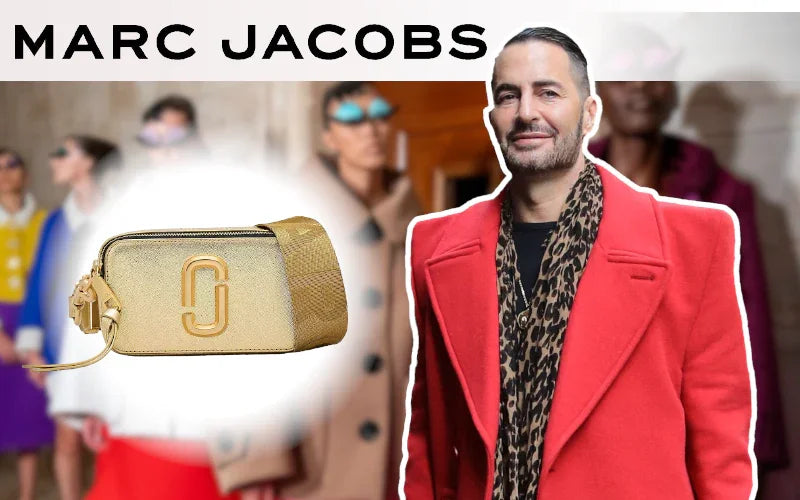
One answer covered the question of who owns Marc Jacobs for nearly thirty years, before it changed in 2026. The LVMH majority stake dates to 1997, the year Jacobs took up the Louis Vuitton role, and the exact percentage was never published. On 14 May 2026 LVMH made public a definitive agreement to sell the brand to WHP Global and G-III Apparel Group; the deal closed on 1 September 2026. Two parts make up the structure: a fifty-fifty joint venture owns the intellectual property with WHP Global leading licensing, while G-III operates the wholesale, retail and e-commerce business under a long-term license from that venture. A figure of roughly $925 million came from Business of Fashion and WWD, but LVMH disclosed no value, so it is press-reported rather than official. Founder and Creative Director is still Marc Jacobs, with the closing announcement committing to continuity of the creative vision, collections and shows; Eric Marechalle has been chief executive since 2017.
| Year | The milestone |
|---|---|
| 1963 | Marc Jacobs born in New York City |
| 1984 | Parsons graduation; the brand timeline dates the founding here |
| 1988 | Signs on at Perry Ellis |
| 1992 to 1993 | Grunge collection, and then departure from Perry Ellis |
| 1997 | The Louis Vuitton job starts; LVMH acquires a majority stake; the SoHo store opens |
| 2001 | Debut of Marc by Marc Jacobs |
| 2007 | Daisy fragrance arrives |
| 2010 | Bleecker Street gets Bookmarc |
| 2013 | Last Louis Vuitton collection, in October |
| 2014 | Marc Jacobs Beauty goes on sale |
| 2015 | End of Marc by Marc Jacobs |
| 2019 | The Marc Jacobs and The Tote Bag arrive; watches end after November |
| 2020 | Heaven by Marc Jacobs goes live in September |
| 2026 | WHP Global and G-III close the LVMH acquisition on 1 September |
The pattern of the shows
Unlike most houses of its size, the company does not follow the four-season calendar they still use. It shows once a year, in early February, a few days ahead of the New York Fashion Week opening and deliberately off schedule. The name runway collections, rather than spring or fall lines, follows from collections that are seasonless and named for the year. The last few editions ran on 2 February 2024 at the Park Avenue Armory, on 3 February 2025 at the New York Public Library, and in February 2026 at the Armory again. The 2026 show, titled «Memory. Loss.», was read by trade coverage as a turn toward wearability. It is not confirmed whether it also showed during September 2026 fashion week, and on the established pattern the next outing falls in February 2027.
What is on sale today
Handbags form the commercial core, with 312 products in the full bag listing on the US site in September 2026, across canvas, jacquard, leather, denim and seasonal fabrics. The entry point is canvas totes at about $150 and leather totes reach about $598, while The Dakota Tote sits at roughly $798, all figures that vary by country and change without notice. Outside bags the offer runs to ready-to-wear, shoes, wallets, jewelry, eyewear and children’s products, plus a permanent discount section called MARCDOWN. Fragrance dates to Daisy in 2007, named after Daisy Buchanan from The Great Gatsby. Marc Jacobs Beauty dates to 2014 and now operates under Coty, which relaunched the line in 2026, while watches were discontinued after November 2019 and carry no valid warranty. Discount dominates physical retail: the store locator listed 103 locations in September 2026, of which 46 were boutiques and 57 outlets, with Regent Street in London the only boutique in Europe.

Новые комментарии