
The Row Label Revisited: How its Olsen Twins Understated Luxury Label Came to Be
Mary-Kate and Ashley Olsen did not set out to become the reigning architects of quiet luxury when they founded The Row in 2006. The label emerged from a personal frustration: the twins, already veterans of the entertainment industry since childhood, wanted a white t-shirt that actually fit well and lasted. That search for the perfect basic became the founding principle of a brand that now sits at the top of the fashion hierarchy, commanding prices and waitlists that rival houses with a century more history behind them.
The name in question serves as a subtle wink and an earnest tribute. Its name and ethos were inherited from Savile Row, the London street linked with bespoke tailoring.. Precision, restraint, and craftsmanship over logos or seasonal noise. Two decades on, give or take, that founding idea has not wavered, despite the fact that the brand has branched out into ready-to-wear, footwear, and the accessories category widely seen as having built its cult status: the row bags.
Beginning at Basic Essentials to a Billion-Dollar-Level Aesthetic
The opening years of The Row were restrained by deliberate choice.
The Olsens built from t-shirts and cashmere, patiently constructing a wardrobe of essentials before bringing in tailoring, outerwear, and eventually accessories.
By the early 2010s, serious industry credibility had settled on the label; winning the CFDA’s Womenswear Designer of the the row fashion suede top handle Year award in 2012 was an uncommon achievement for such a young house, a sign that the fashion establishment now took the sisters seriously as designers rather than celebrities with a side project.
What marked out The Row apart from other celebrity-launched labels was its rejection of chasing trends. As the bulk of fashion during the 2010s embraced logomania and maximalism, The Row moved toward the reverse approach. The brand’s signature became understated palettes, superb fabrics, and cuts that put fit ahead of flash. This restraint is exactly what «quiet luxury» means as a term today, and The Row is widely credited as the label that defined the aesthetic before it had a name.
Pricing has always lived up to the high aspirations. The ready-to-wear line routinely land in the four-figure-plus territory, and the leather pieces from the label sit comfortably in the four-figure territory and higher. This positioning was deliberate from the start — the Olsens wanted The Row to hold its own against Hermès and Céline, rather than secondary or lower-tier labels. Nearly twenty years down the line, such a comparison is no longer a reach.
The Meteoric Rise of The Row Bags
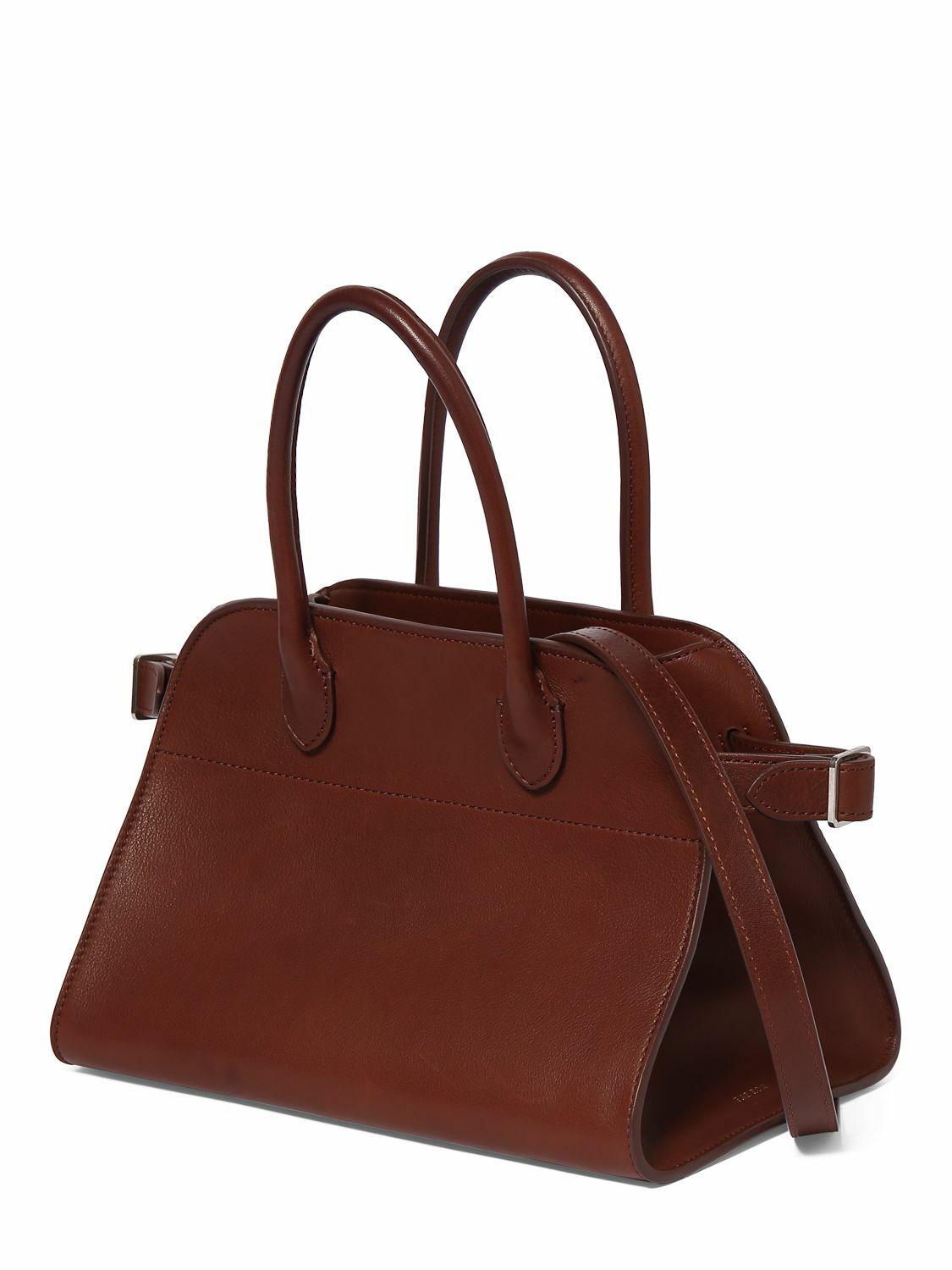
The Row’s reputation may have been forged on ready-to-wear, but it was the bags that transformed it into a sweeping cultural obsession. The row handbags inhabit a curious and coveted position in the market: at once they are stripped down almost to namelessness and unmistakable at a glance to those fluent in fashion. Few styles show any logo at all, nothing in the fittings that announces itself. Rather, recognition comes from contour, balance, and how the leather hangs.
Within the row bag lineup, a small cluster of models have achieved near-mythical status. The Margaux, with its slouchy, unstructured silhouette and signature pleating along the sides, emerged as one of the most Googled bags going the moment it was spotted on Mary-Kate Olsen’s own arm. Shoppers researching where to buy The Row Margaux bag quickly learn that supply runs thin and resale prices often exceed retail, plain evidence that demand has outrun supply. Multiple size and leather options exist for the bag, and each option comes with its own lead time depending on the season and retailer.
Among totes, The Row’s version stands as another anchor point of the lineup, prized for its build that balances structure with softness and its capacity to go from photo sets to daily use without looking out of place in either context. Totes from The Row tend to prioritize pared-down shapes and sparse hardware, reinforcing the brand’s overarching approach that a bag should be evaluated for build and material, not brand signaling.
For anyone building a row bags overview before making a purchase, it helps to recognize that the brand structures its accessories differently from the way most luxury labels typically do. No single «it bag» gets pushed every season. Rather, a shifting lineup of leading row bags — Margaux, Sofia, Ascot, and a few others — receive periodic updates in hue and dimension while keeping their founding silhouette intact for years at a time. That’s by design. The Row wants its bags to function like investment pieces, not seasonal impulse buys.
Craftsmanship as the Central Selling Point
Every conversation about The Row eventually returns to materials. Leather is sourced from elite European tanneries and works with ateliers that specialize in handbag construction, often the same facilities used by long-established luxury houses. This helps explain why the row bag category commands such high prices — before labor costs are even added, the leather itself makes up a sizable portion of the price.
Here, craftsmanship particulars are of outsized importance. Hand-stitching, minimal seams, and hardware that is often custom-cast rather than sourced from a catalog all feed into a final piece that feels noticeably different from mass-produced luxury goods. People who’ve held both a Margaux and an equivalent bag from a brand leaning harder on branding tend to point to the leather’s heft and suppleness as the fastest indicator of quality.
This same emphasis on high-grade materials carries over into ready-to-wear as well, featuring region-specific cashmere and wool blends co-developed with mills in Italy solidify the brand’s upscale standing. What emerges is a product range where quality control seems steady across categories—coat, shoe, or one of the row handbags alike.
Finding Your Way Through a The Row’s Sale Events and Its Secondary-Market Worth
Markdowns from The Row are rare, and when a row sale does appear, it generally stays fairly small compared to the deeper discounts common among other luxury labels. Because the label controls distribution tightly and produces in relatively limited quantities, oversupply rarely happens, which means there is less inventory that needs to be discounted at season’s end. Those wanting a meaningful price reduction may have to wait on select multi-brand retailers to hold their own promotions, rather than counting on discounts straight from The Row.
An interesting consequence of this scarcity is robust resale value. Certain bags, particularly the Margaux, have been known to hold or exceed their original retail price on the secondary market. This is unusual in fashion, where most bags depreciate the moment they leave the store. That’s part of why so many customers regard buying from The Row as a lasting investment rather than a fleeting seasonal splurge.
For shoppers specifically on the hunt for a row sale, staying patient and persistent tends to pay off better than rushing. Tracking authorized stockists and signing up for notifications at department stores carrying The Row fashion line usually works better than banking on frequent sales through the brand’s own outlets.
Setting Side by Side The Row’s Signature Bag Styles
Grasping the distinctions among the top row bags makes it easier to see which style fits a particular lifestyle or budget. The table below offers a general comparison based on publicly known characteristics of each style’s design intent, without attaching specific prices that vary by retailer, region, and season.
| Bag Type | Shape | Ideal For | Hardware Style |
|---|---|---|---|
| Margaux | Relaxed, loosely shaped tote | Everyday carry, editorial styling | Understated, tone-matched |
| The Row Tote Bag (classic) | Firm-shaped, boxy | Office use, travel, dressier occasions | Subtle metallic details |
| Sofia | Small-scale shoulder bag | Evening wear or streamlined daily carry | Hidden clasp |
| Ascot | Architectural top-handle | Work contexts, dressier occasions | Sculpted handle, without visible branding |
This kind of row bags overview is useful for narrowing down a first purchase, especially for shoppers new to the brand who may feel overwhelmed by how similar the silhouettes can appear at first glance. The differences, while subtle, are meaningful once a bag is in hand.
En 2026, la maison The Row se positionne dans l’industrie ?
The Row, heading into 2026, shows no signs of loosening its hold on the low-key-luxury discussion. In lieu of presenting among its American peers, The Row continues to show at Paris Fashion Week—a deliberate choice that positions it alongside the most venerable European houses. The payoff of this choice, settled upon years back, has manifested in both critical respect and commercial standing.
Distribution remains intentionally narrow. The Row is sold through its own flagship boutiques and a short list of authorized luxury retailers, a strategy that keeps inventory tight and demand high. Shoppers researching where to buy The Row Margaux bag in 2026 will find that authorized stockists remain the safest route, both for authenticity guarantees and for any future resale value the bag might carry.
By now, The Row’s impact on the wider fashion landscape can’t be ignored. Numerous other houses have tried to mimic the formula of muted colors, outstanding cloth, and branding-free design, but scarcely any have equaled the consistency The Row has maintained since 2006. The label continues to be one of the most convincing examples that minimalism, when well-executed, can be its own form of luxury — particularly for shoppers building a wardrobe around lasting value rather than trend cycles.

Новые комментарии